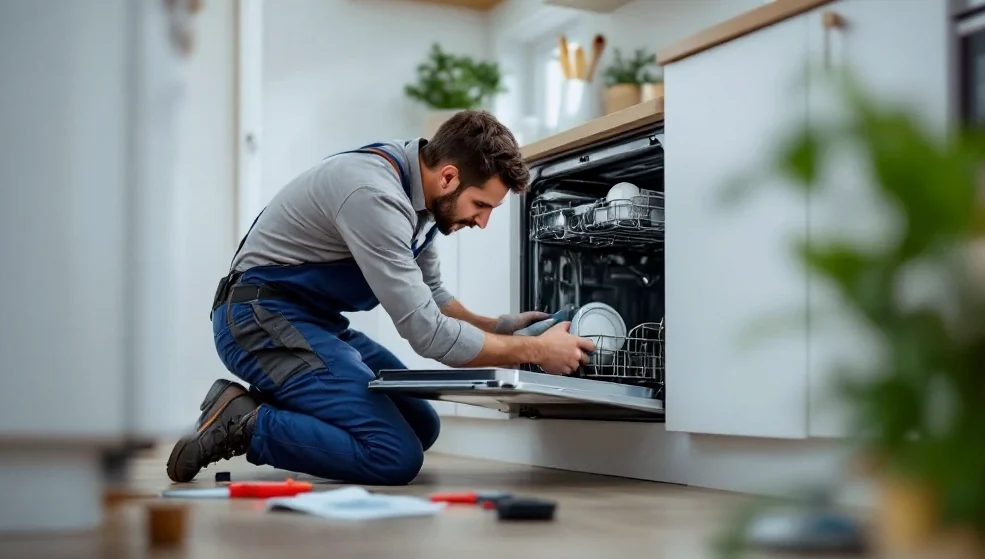
What is Dishwasher Repair and how does it work?
Dishwasher repair is what a pro does when your machine stops cleaning, draining, or running right. A technician comes to your home, finds the fault, and fixes it on the spot.
In Mobile, dishwashers take a beating. Hard water from the aquifer leaves mineral scale on heating elements and spray arms. Humidity rusts exposed wiring and door seals faster than in drier climates. And if your house sits near the bay, salt air eats at metal components under the kickplate. A repair isn't just swapping a part. It's figuring out which problem is real and which is just a symptom of the environment.
A good tech starts by listening. You describe what happened. Did it stop mid-cycle? Did it leave grit on plates? Is the water not hot? Then they run a diagnostic cycle, checking voltage, water temperature, and drain pump operation. They look for error codes on the control board. Most modern machines store a history of faults, and reading those codes tells a story. A single blinking light might mean a stuck float switch or a failed heating element.
The actual repair usually takes one to two hours. Common jobs like replacing a drain pump or a water inlet valve take about an hour. A control board swap can run closer to two because the tech has to reprogram the machine afterward. They test everything before they leave. They run a full cycle to make sure the dishes come out clean and dry. If it's a hard-water issue, they might recommend a whole-house water softener or a specific detergent that works better with Mobile's water chemistry.
Pricing depends on the part and the labor. A simple fix like a clogged spray arm might cost less than a hundred dollars. A new control board can run several hundred. The only way to get an exact figure is a free on-site quote. Most shops in Mobile charge a service call fee that covers the diagnosis, and that fee gets applied to the repair if you go ahead with it.
How Dishwasher Repair works, step by step
A repair starts with a phone call. You describe the problem, the tech arrives with a truck full of common parts, diagnoses the issue, and fixes it in your kitchen. No shop visit needed.
First, you call a local shop like Mobile Appliance Repair. You tell them what your dishwasher is doing or not doing. A good dispatcher asks specific questions: Does it fill with water? Does it drain? Does it get hot? Any error codes on the display? That conversation saves time. The tech can load the right parts before they ever leave the shop. If you say the water stays in the bottom after a cycle, they bring a drain pump and a check valve. If you say it won't start, they bring a door latch assembly and a control board.
The tech shows up at your house within a window you agree on. They bring a rolling toolbox, a multimeter, and a tablet or laptop for reading service manuals. They lay down a mat to protect your floor. They ask you to show them what happened. Then they pull the machine out from under the counter. They disconnect the power and water. They take off the kickplate and the lower access panel. That's where the guts live: the pump, the heating element, the wiring use.
Diagnosis is systematic. They check the simplest things first. Is the drain hose kinked? Is the filter clogged? Is the float switch stuck? If those are fine, they move to electrical tests. They check voltage at the water inlet valve. They check resistance on the heating element. They check the drain pump for continuity. Most faults show up in the first ten minutes of testing. If the control board is dead, they might need to order it, but many common boards are stocked on the truck.
Once they find the bad part, they replace it. They clean any debris from the sump area. They reattach hoses and wires exactly as the diagram shows. They test the machine by running a short cycle. They check for leaks at every connection. They make sure the door seals tight. They clean up any water that spilled during the job. Then they walk you through what they did and what to watch for in the future.
If the repair is under warranty, they handle the paperwork. If it's a simple fix you could have done yourself, they'll tell you that too. Sometimes the problem is a blocked garbage disposal or a half-closed water valve under the sink. A good tech doesn't upsell you on work you don't need.
Why Dishwasher Repair matters for your home
A broken dishwasher wastes water, ruins dishes, and can damage your kitchen floor. Fixing it fast saves money and prevents bigger problems like mold or a flooded kitchen.
A dishwasher that doesn't drain leaves standing water in the bottom. That water is warm and full of food particles. In Mobile's humid climate, mold can start growing in twenty-four hours. You'll smell it before you see it. That smell gets into the plastic tub and the rubber seals. A simple drain pump replacement costs a fraction of what you'd pay to replace a moldy machine or repair water damage to your cabinets.
A machine that doesn't heat water properly leaves dishes greasy and spotted. You end up hand-washing everything anyway, which uses more water and more of your time. The heating element also dries the dishes. Without it, you get puddles on your plastic cups and water spots on your glassware. Replacing a bad heating element is a straightforward job that restores the machine's ability to sanitize and dry.
A leaky dishwasher is a slow disaster. A pinhole leak in the supply line drips onto the floor for weeks before you notice. That water seeps under the vinyl or laminate and rots the subfloor. In Mobile, where many homes have slab foundations, water damage can travel under the flooring and into the base of cabinets. By the time you see a stain on the ceiling below, the damage is done. Catching a leak early and replacing a worn hose or a cracked pump housing is cheap insurance.
Mobile's hard water shortens the life of dishwashers. Scale builds up on the heating element, making it work harder and burn out faster. Scale clogs the tiny holes in spray arms, so water doesn't reach the top rack. A tech can descale the machine and recommend a water softener or a rinse aid that fights scale. That advice alone can add years to the machine's life.
Common problems and what causes them
Most dishwasher problems fall into a few categories: it won't start, won't fill, won't drain, won't clean, or won't dry. Each has a short list of likely causes.
The most common call in Mobile is a dishwasher that won't drain. Nine times out of ten, the drain pump is dead or the drain hose is clogged. Food scraps and grease build up in the pump impeller and jam it. The motor overheats and burns out. Sometimes the problem is simpler: the drain hose has a loop that traps water, or the garbage disposal knockout plug was never removed. A tech checks all of those before replacing the pump.
A dishwasher that won't start is usually a door latch issue. The machine won't run if the latch doesn't signal that the door is closed. The latch mechanism wears out or the microswitch inside fails. Less common causes are a blown thermal fuse or a dead control board. The thermal fuse is a cheap fix. The control board is not. A good tech tests the latch and the fuse before ordering a board.
Dishes coming out dirty often point to clogged spray arms or a bad wash pump. The spray arms have tiny holes that get blocked by hard-water scale or food debris. You can sometimes clear them by removing the arms and rinsing them under hot water. If the wash pump is weak, the water pressure drops and the dishes don't get scrubbed. A failing wash pump makes a grinding or humming noise before it dies completely.
A dishwasher that fills but then stops mid-cycle usually has a bad water inlet valve or a stuck float switch. The float switch tells the machine when the water level is high enough. If it sticks, the machine thinks it's full and never heats or washes. The inlet valve can fail electrically or get clogged with sediment. Mobile's water has a lot of sand and silt in some areas, especially after a heavy rain. A sediment filter on the supply line can prevent that problem.
Dishes that come out wet are usually a drying problem. Most dishwashers use a heating element and a fan to dry. If the element is burned out, the fan won't run because the machine thinks it's not hot enough. If the rinse aid dispenser is empty, water beads up on dishes instead of sheeting off. In Mobile's humid summer, even a working dryer might leave dishes damp. Running the machine at night or using the heated dry option helps.
- Won't drain: dead drain pump, clogged hose, garbage disposal knockout still in place.
- Won't start: bad door latch, blown thermal fuse, failed control board.
- Dirty dishes: clogged spray arms, weak wash pump, hard-water scale.
- Stops mid-cycle: stuck float switch, bad water inlet valve, sediment in supply line.
- Wet dishes: burned-out heating element, empty rinse aid, high humidity.
Common questions about Dishwasher Repair
Need appliance repair in Mobile? Get a free estimate today.
📞 256-587-8950